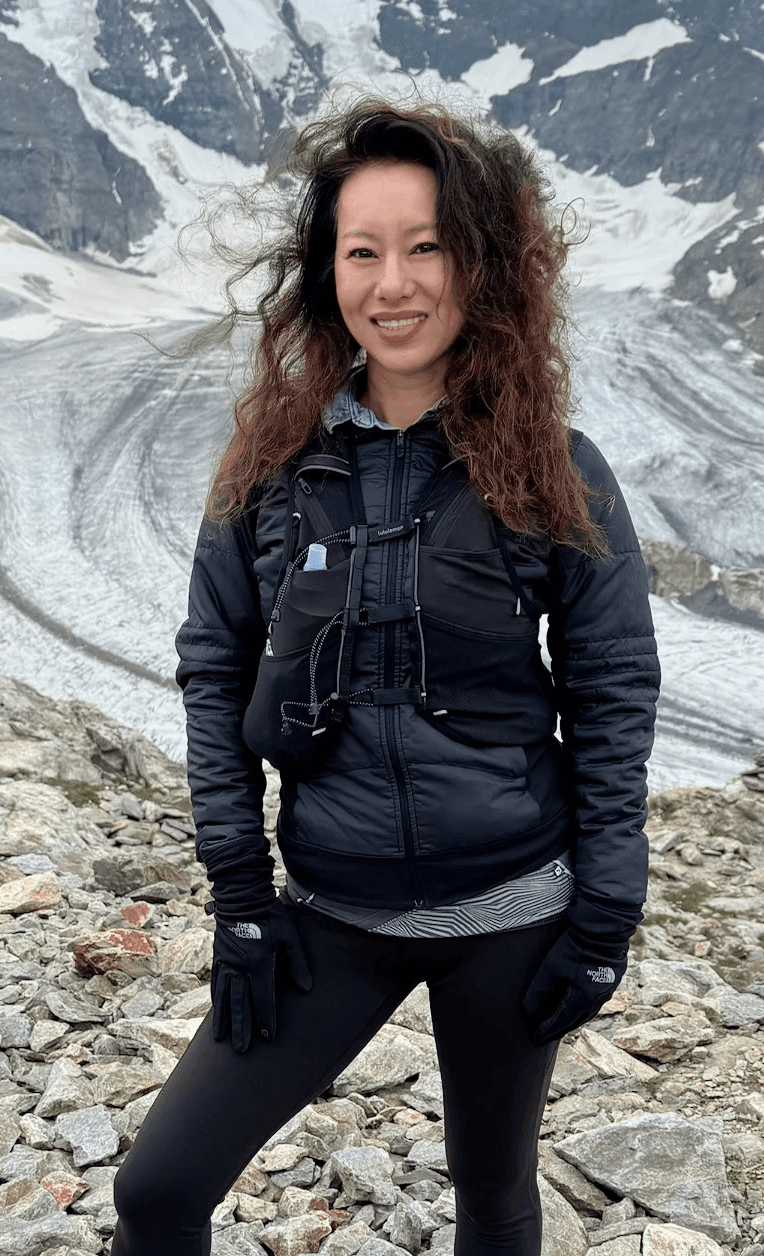
Marketing with Meaning: A Conversation with Tu Rinsche @ All Rights Advisors
Tu Rinsche specializes in making the complicated usable. With over 20 years of experience at the intersection of business, human rights, and global supply chains, Tu helps global brands build durable social capital by aligning what they say with what they do. As Founder and Principal at All Rights Advisors, Tu’s work focuses on turning complex, high-risk issues into clear strategies, credible narratives, and measurable outcomes.
Tu’s career spans leadership and advisory roles across some of the world’s most recognized companies, including The Walt Disney Company, HP Inc., Starbucks, Marriott International, and The Ritz-Carlton. She uses this deep knowledge of human rights and supply chain accountability to help companies make sustainability and human rights understandable, relevant, and actionable.
In this week’s Marketing with Meaning interview, Tu discusses how to make complex issues engaging by connecting them with human stories, why communications professionals should emphasize clarity over simplification, and the value of “easy” Instagram recipes as a reminder that things are often more complex than they appear.
1. What is the biggest challenge you are focused on solving in your role right now?
The biggest challenge I’m focused on right now is making human rights and sustainability matter to people beyond a narrow circle of experts.
Inside companies, there is often real work happening, including risk assessments, supplier engagement, and remediation efforts, but the way it gets communicated is either too technical to understand or too polished to trust. As a result, it doesn’t land with the audiences who actually shape outcomes: consumers, employees, investors, policymakers, and civil society.
So the problem isn’t necessarily a lack of activity. It’s a gap between substance and understanding.
My focus is on closing that gap. That means helping organizations translate complex supply chain realities into clear, concrete narratives that people can follow. Not by simplifying the issues to the point of distortion, but by structuring them in a way that makes them legible: What’s the risk? Where does it show up? What is the company doing about it? What’s still unresolved?
When people understand how something works, they are far more likely to care about it and to act on it. In this space, sustained attention is what ultimately drives better decisions and better outcomes.
2. What’s one shift you’re seeing right now that’s redefining how brands connect with people, for better or worse?
A move toward substance over slogans—driven by a more educated and skeptical audience.
People are more aware of how global systems work, even if they don’t have the technical language for it. They’re asking more grounded questions: Who made this? Under what conditions? What happens behind the scenes?
The opportunity is to meet that curiosity with clear, accessible storytelling, not overwhelm it with jargon or reduce it to marketing language. The brands that are doing this well are treating their audience as capable of understanding complexity, if it’s explained well.
3. What’s one thing that’s surprisingly effective at engaging audiences right now, and one thing that brands think works but actually turns people off?
What works: making the invisible visible.
When you take something abstract—like a supply chain—and make it tangible through a person, a place, or a decision point, people engage. Not because it’s emotional for the sake of it, but because it’s concrete.
What turns people off: overproduced narratives that feel designed to go viral.
Audiences can tell when something is engineered for attention rather than understanding. It creates distance instead of connection. And nowadays with AI, it is more obvious than ever.
4. Is cultural relevance more about a brand staying true to its own voice and values, or aligning with its audience’s? Where do brands most often get that balance wrong?
Cultural relevance starts with internal consistency, not external alignment.
The strongest brands are clear about who they are and what they actually do over time. That matters because audiences are increasingly sensitive to whether a message is anchored in a real track record or whether it appears in response to what is currently "en vogue."
Where brands often get this wrong is when they try to step into a conversation simply because it is culturally visible, without having built credibility in that space. In those moments, even well-intentioned messaging can feel disconnected. People are not just listening to what a brand says; they are testing it against what the brand has done.
The balance, in my view, is that values should be stable, and communication should be adaptive. A brand does not need to speak to everything, but when it does speak, it needs to be able to point to substance behind it.
5. Can you share a campaign or story that’s really stuck with you, something that’s shaped how you lead or think about your work?
While at Marriott International, I led enterprise human rights and launched the company’s first global mandatory human rights training.
One story that has stayed with me is the work we did to address human trafficking in the hospitality sector.
At the time, human rights issues often felt too abstract, and human trafficking is an especially difficult and uncomfortable topic. I did not expect it to resonate broadly with hotel employees or customers.
What made the difference was how we approached it. We grounded the issue in the day-to-day reality of hotel operations, focusing on what to look for, what to do, and why it matters. It shifted from a distant problem to something tangible and actionable.
The response was striking. I received personal letters from hotel associates around the world, as well as customers and loyalty members, sharing how proud they were to be part of Marriott and how the effort changed how they saw their role or relationship to the brand.
It reinforced a core belief for me: even the most difficult issues can engage people if you make them specific, relevant, and human.
6. How can brands talk about purpose or sustainability in ways that feel real, not performative?
The starting point is recognizing that most audiences do not experience purpose or sustainability through formal disclosures. A 200+ page sustainability report might meet regulatory or investor needs, but it is not how trust is built with employees, customers, or the public.
If brands want to communicate in a way that feels real, they need to move away from communication as documentation and toward communication as explanation.
That means focusing less on volume and completeness, and more on clarity and relevance: What are the actual issues in your value chain? Where are you exposed? What are you doing about it today, not just committing to in the future? And importantly, what is still unresolved?
It also means grounding communication in real examples rather than abstract principles. People connect to decisions, trade-offs, and specific moments of action much more than they connect to high-level statements about purpose.
7. Please share something you learned about your audience in the last year that completely surprised you or caused you to change your strategy?
Last year, I became a writer. It was a scary thing for me to do. I had time and I wanted to be helpful, so I started a Substack to share what I have learned over two decades working in human rights and global supply chains, and to make the work more accessible to others trying to do it. That shift has given me a completely new relationship with an audience, and I am constantly learning what actually resonates.
One of the most surprising things I have learned is that people are far more willing to engage with complexity than we often assume. Every week, I hear from readers who say a topic finally made clear sense for them or that it was the first time they understood issues like forced labor or supply chain risk in a meaningful way.
In sustainability and human rights communications, the default instinct is not always to simplify. In many cases, it is the opposite: to make content so comprehensive, technical, and internally rigorous that it becomes difficult to access. The work ends up either over-simplified to the point of losing meaning, or over-developed to the point of becoming illegible to anyone outside the field. In both cases, the audience is lost.
What I have seen instead is that people respond to clarity, not simplification. If you explain something step by step, anchor it in real examples, and show how the system actually works, people will stay with you. Complexity is not the barrier. Lack of structure is.
That has changed how I approach writing and communication. I do not see my role as being a “talking head” or trying to be prolific for the sake of visibility. I am focused on making complex topics legible and useful. That means structuring ideas more carefully, grounding them in concrete examples, and respecting the audience’s ability to engage with theoretical material when it is properly framed.
8. How did you end up in your current role? What was the turning point?
I didn’t follow a linear path into this work. I built it by stepping into problems that didn’t have clear owners and figuring out how to solve them.
Early in my career, I focused on policy, then human rights and supply chains from an operational and compliance perspective. As I moved across companies and industries, I became increasingly curious about how the same issues showed up differently depending on the business model, the culture, and the level of maturity. That exposure shaped how I think. I would not be where I am today, or who I am as a practitioner, without having worked inside so many different organizations. Each one required me to adapt quickly, learn from the inside, and challenge my own assumptions.
Over time, I noticed a consistent gap. Companies were doing complex, high-stakes work, but struggling to explain it in a way that decision-makers, customers, or even internal teams could understand and act on.
The turning point was realizing that this was not just a communications issue. It was a business problem. If people do not understand the risk, they will not prioritize it. If they do not see the relevance, they will not invest in it. And if companies cannot explain what they are doing in a credible way, they lose trust even when progress is real.
That insight shifted how I approach my work in every role, and even more so now as a consultant. I moved from focusing only on building programs to also shaping how those programs are translated into strategy, narrative, and action. It is a space that requires both structure and creativity, which is what continues to draw me in.
9. What skill do you wish you’d developed 10 years ago that would have accelerated your career or made you a more effective communicator?
Ten years ago, I had the opportunity to sit within Corporate Affairs and Communications at my company. At the time, I did not fully appreciate how foundational that experience would become for the work I do today. Looking back, it gave me an early and very practical education in how narratives shape whether complex issues are understood, prioritized, or ignored.
The skill I wish I had developed much earlier is brand storytelling for social impact and systems change.
Not just communicating information but learning how to think like a creative: how to build storyboards, shape a narrative arc, and translate systems into stories that people can actually enter. I was very fluent in the substance of human rights and supply chains, but I underestimated how much impact depends on how that substance is structured and experienced by different audiences.
In this space, the challenge is rarely a lack of content. It is how to make something as complex as human rights or a global supply chain feel understandable without stripping away its meaning.
That requires thinking visually and narratively at the same time: what is the entry point, who is the protagonist, what is the tension, and what is the moment that makes someone care enough to stay with the issue.
Storytelling is about structuring complexity in a way that makes people able to see themselves in it, and therefore care enough to engage with it.
10. When you’re not thinking about marketing or communications, what inspires your creativity or keeps you grounded?
As a consultant and writer, marketing and communications are rarely ever fully off my mind, so I look for inspiration outside of that work.
My kids are a constant source of creativity. Their questions force me to explain complex ideas in simple, honest ways, which often reshapes how I think about storytelling. I also get a lot from art and running outdoors, both of which create the distance needed for ideas to surface more clearly.
What keeps me grounded is community: colleagues, friends and family who challenge my thinking and keep it honest. And, more mundanely, attempting “easy” recipes from Instagram that rarely turn out that way. It is a good reminder that things are often more complex than they appear.