
Cultural Relevancy Index
Challenge
Brands often invest in product placement to build cultural relevance but no metric existed to measure whether those investments were actually delivering on this KPI. Despite advances in helping clients understand performance through brand lift studies, direct attribution, and MMM integration, none of those tools mapped to the core reason most brands were investing in the first place. Without a way to measure cultural relevance directly, brands were at risk of churning and it was proving difficult to demonstrate ROI against the KPI that mattered most.
Solution
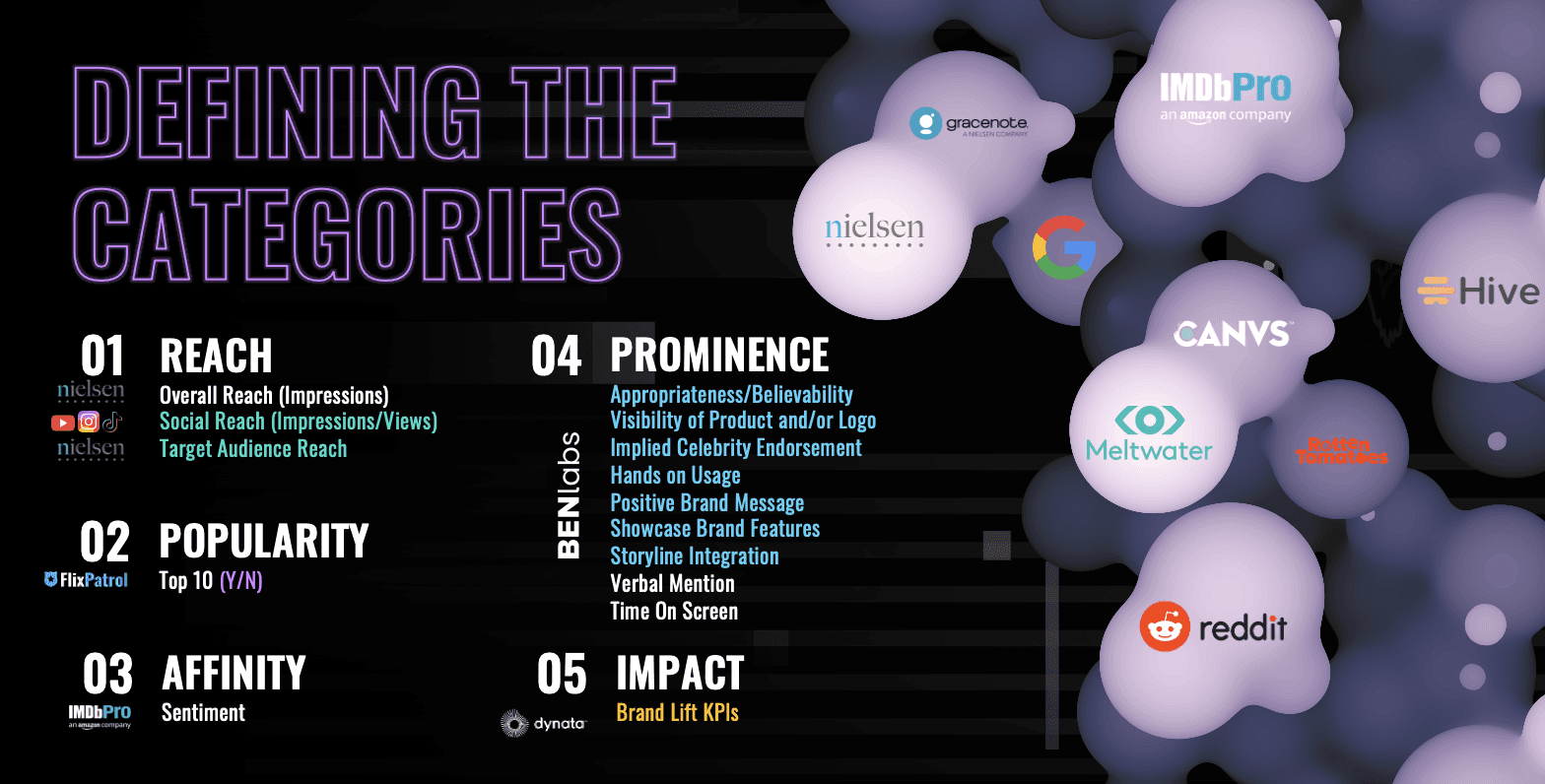
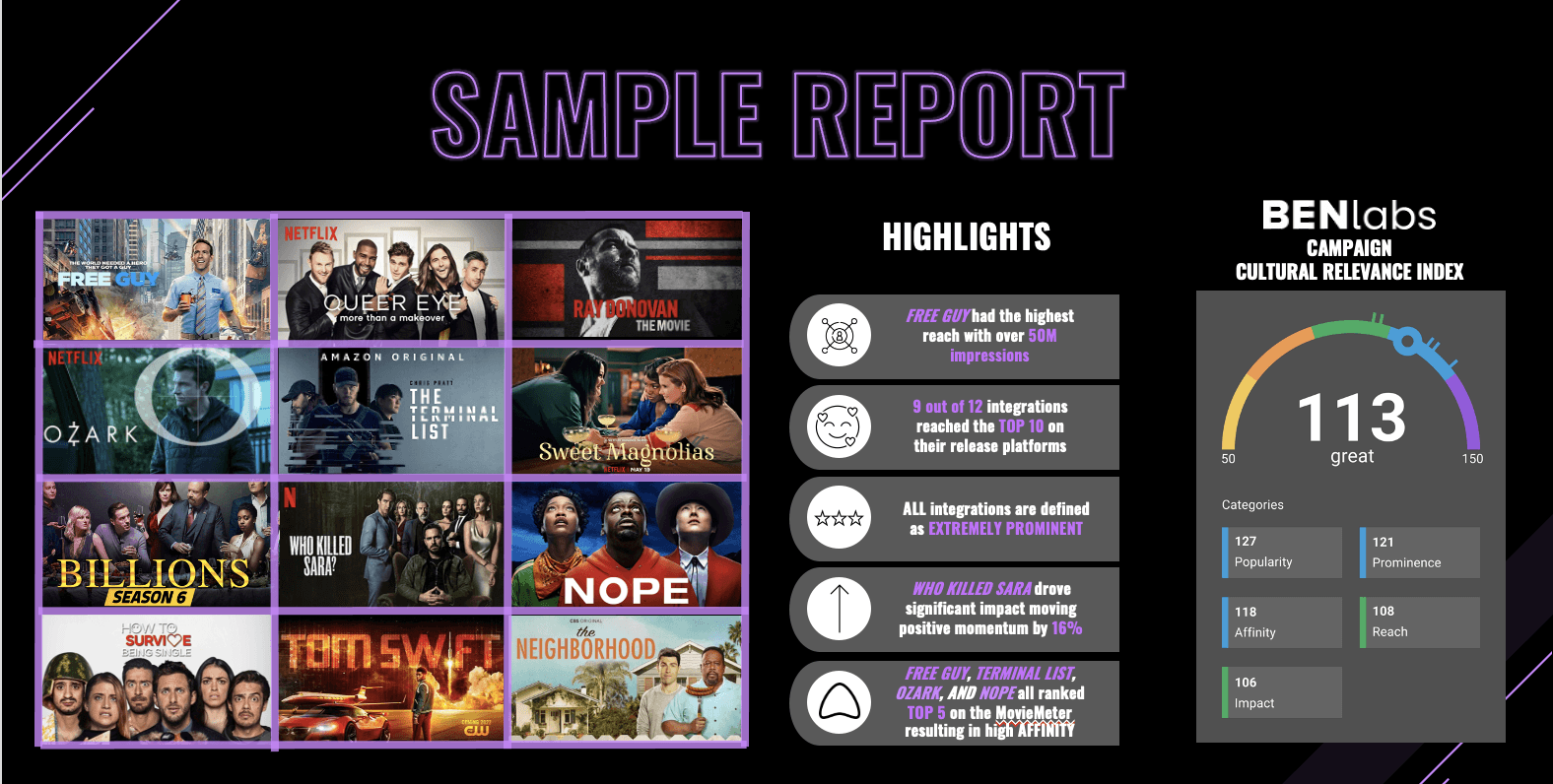
I spearheaded the development of a proprietary measurement model called the Cultural Relevancy Index that was built from scratch with cross-functional input from BENlabs’ client services, content, insights, strategy, data analytics, and product teams. Rather than retrofitting existing metrics, the team started with principles: defining what cultural relevance actually means, identifying the most reliable data sources for each factor, and pressure-testing early hypotheses against real client needs. The result is a customizable five-factor index that includes measures for Reach, Popularity, Prominence, Affinity, and Impact. Each factor is scored on a percentile scale that allows brands to weight each category based on their specific objectives while enabling apples-to-apples comparison across integrations and annual campaigns.
Impact
CRI has been adopted across BENlabs’ client portfolio, with direct impact on client retention and budget growth. A spirits brand and a major tech client both increased their product placement budgets following the introduction of CRI reporting. ADT used CRI to optimize campaign strategy year-over-year, identifying which integration types best delivered on their priority KPIs. Paramount leveraged CRI competitively, demonstrating that brands featured in their content achieved a 13-point CRI advantage over comparable premium content. Microsoft, BENlabs’ largest technology client, described the metric as “measuring the unmeasurable.”