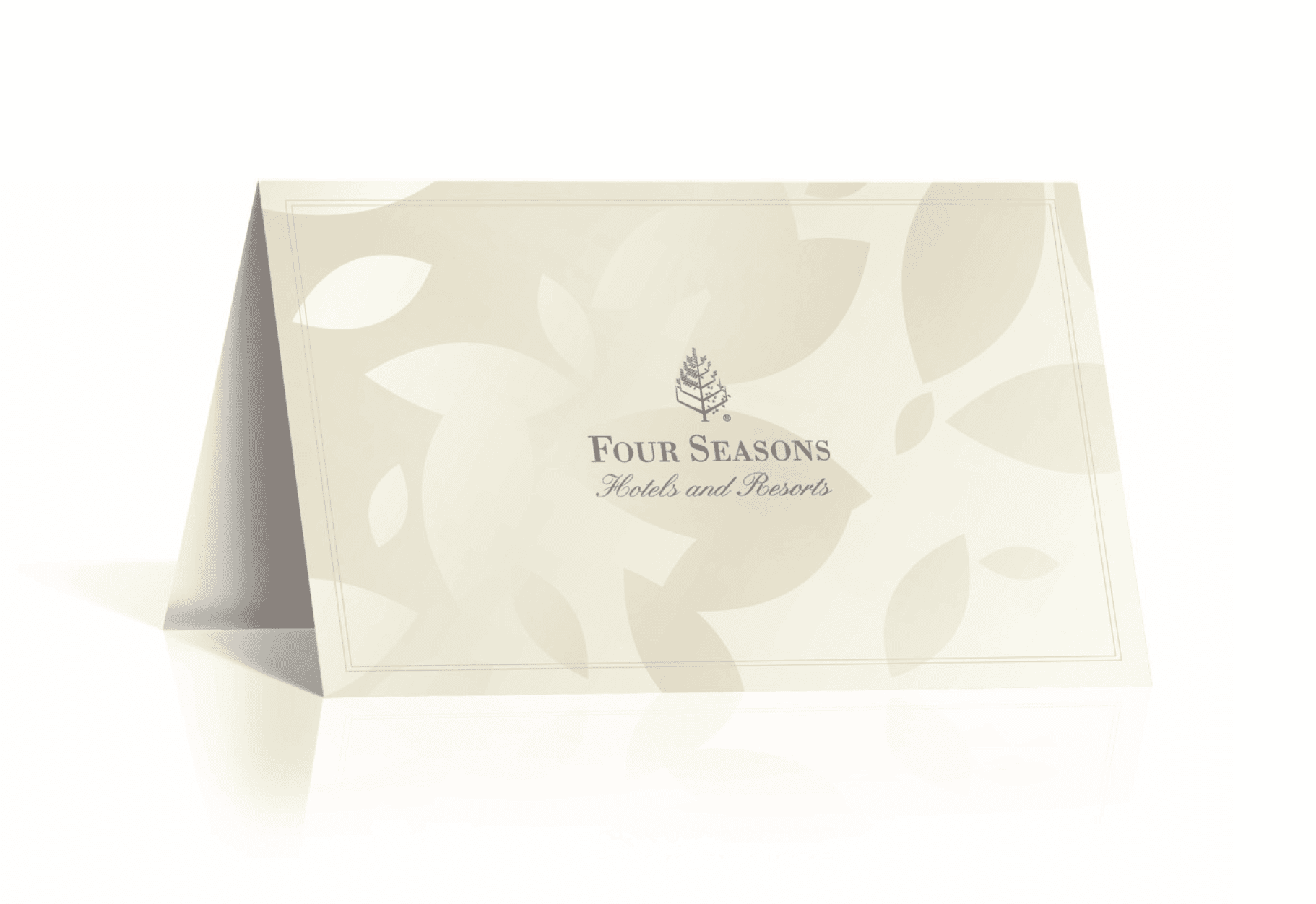
Brand Architecture
Challenge
As Four Seasons entered a significant period of global growth, the brand faced a question that was seemingly simple yet deceptively complex: which elements of the guest experience should be branded Four Seasons, and which should not? Without a clear framework to answer this question consistently, branding decisions across properties were being made ad hoc, creating inconsistency across touchpoints and diluting the brand’s identity and its ability to communicate its core promise of personalized, relationship-driven service.
Solution
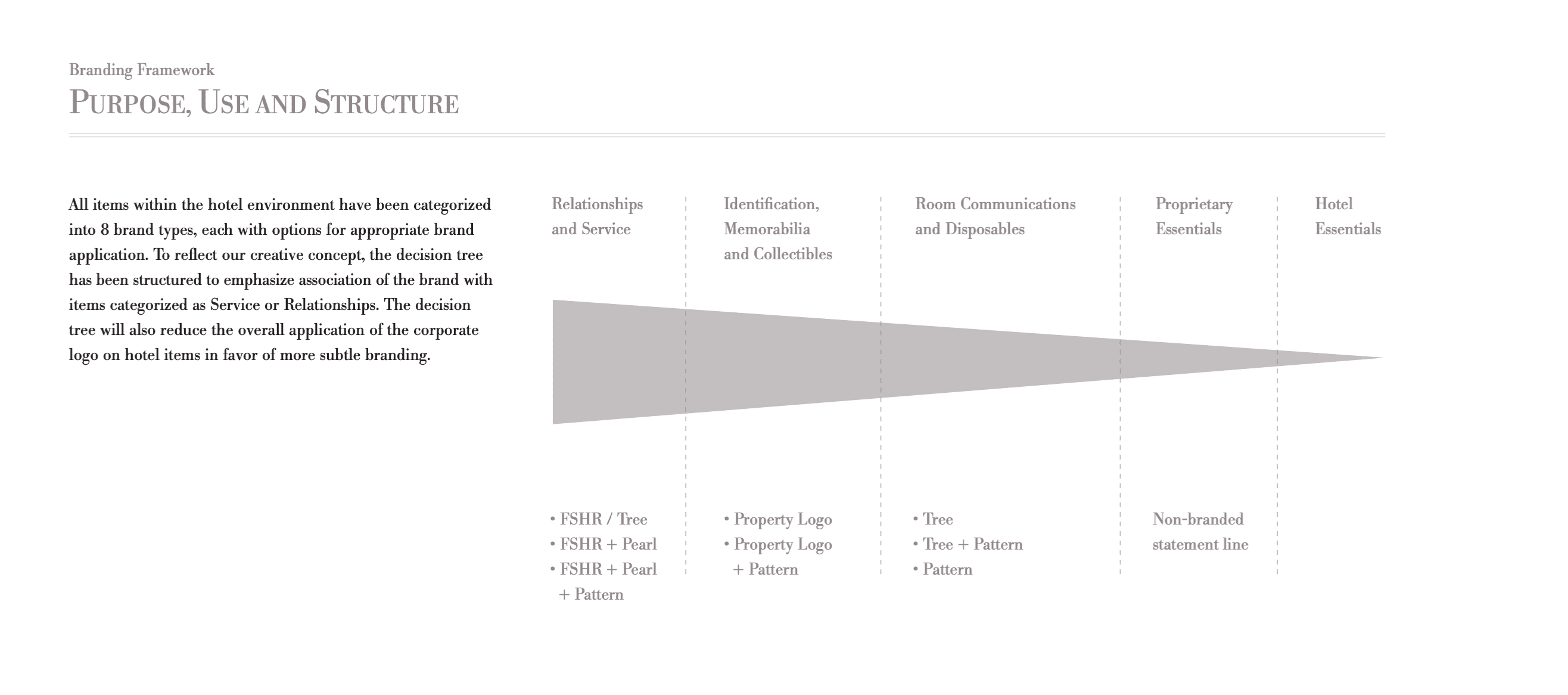
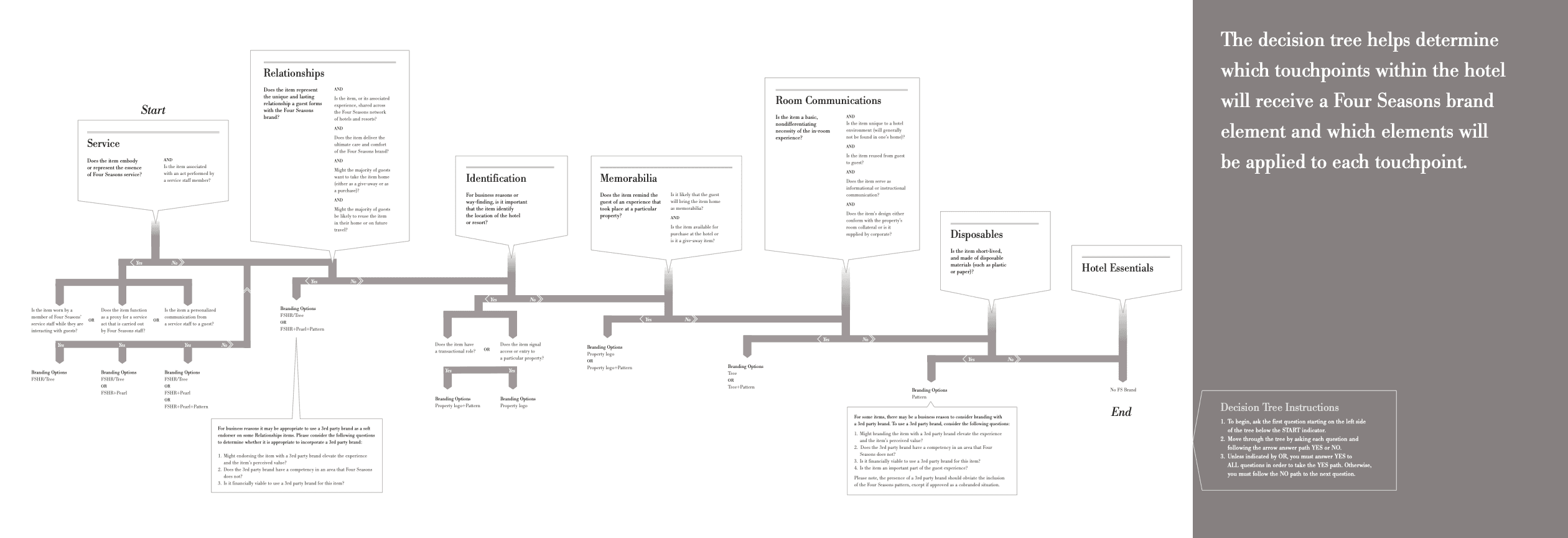
Working as Strategy Director at Siegel+Gale, I led a team through nearly four months of work to answer this question for one of the world’s most iconic hospitality brands. We began with customer and employee research that informed three distinct strategic concepts representing credible positionings and creative concepts for the brand. Once Four Seasons selected a direction rooted in relationship-building and the guest experience, we developed a comprehensive visual identity system including a proprietary color palette and pattern, and a brand architecture decision tree that gave the marketing team a clear, repeatable framework for deciding how and whether any item should carry the Four Seasons brand. From a toothpick to a lobby to a staff name tag, every touchpoint had a principled answer that could be applied consistently within any property around the globe, whether owned or franchised.
Impact
The branding framework shaped the Four Seasons guest experience at a foundational level, influencing everything from the company’s website and marketing campaigns to hotel design and the selection of experiences offered at individual properties. By clarifying what made Four Seasons unique and how to communicate that value consistently across every touchpoint, the work strengthened connections between the brand and both loyal guests and new ones, and gave the company’s marketing team a durable tool for making brand decisions as the portfolio continued to grow.